What Are Binaural Beats and How Do They Work?
Binaural beats are an auditory illusion created when two slightly different frequencies are presented separately to each ear. The brain perceives a third tone equal to the frequency difference, commonly referred to as a binaural beat.
How Binaural Beats Work
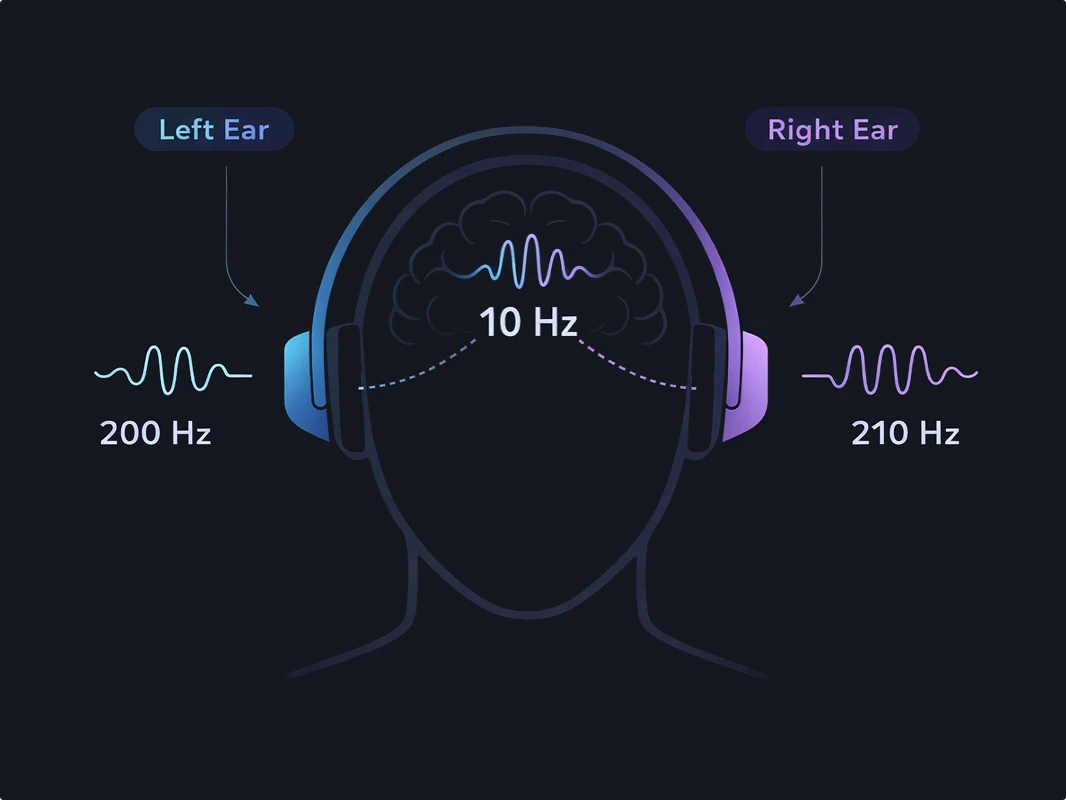
When the brain processes these two tones, it perceives a third, illusory rhythmic pulse. This perceived frequency is the difference between the two tones and is referred to as a binaural beat.
For example:
- Left ear: 200 Hz tone
- Right ear: 210 Hz tone
- Perceived binaural beat: 10 Hz
Do You Need Headphones for Binaural Beats?
Yes. Binaural beats require stereo headphones because each ear must receive a slightly different frequency. Without separate channels, the auditory illusion cannot form properly.
The Science of Brainwave Entrainment
The mechanism most commonly associated with binaural beats is known as brainwave entrainment, sometimes described as the frequency following response (FFR). Although research is ongoing, many studies explore whether rhythmic auditory stimulation may influence attention, relaxation, and perceived mental states.
The brain naturally produces electrical activity across different frequency ranges, commonly categorized as Delta, Theta, Alpha, Beta, and Gamma waves.
When exposed to a consistent rhythmic stimulus, such as a binaural beat, the brain may gradually synchronize aspects of its activity toward the frequency of that stimulus. This process is the basis of the brainwave entrainment hypothesis.
For example, listening to a 6 Hz binaural beat is intended to produce a Theta-frequency stimulus, which some listeners use during meditation, relaxation, or creative activities.
Common Uses of Binaural Beats
Binaural beats are commonly used to support different mental states, depending on the selected frequency range:
| Frequency Range | Associated State | Common Use |
|---|---|---|
| Delta (0.5–4 Hz) | Deep rest and recovery | Sleep support, deep relaxation |
| Theta (4–8 Hz) | Deep relaxation, meditation, creativity | Stress reduction, introspection |
| Alpha (8–13 Hz) | Calm, relaxed alertness | Light focus, relaxed productivity |
| Beta (13–30 Hz) | Active concentration and alertness | Studying, task-focused work |
| Gamma (30–100 Hz) | High-level cognitive processing | Complex thinking, intensive focus |
Do Binaural Beats Actually Work?
Research into binaural beats and auditory entrainment is ongoing, particularly regarding their influence on brainwave activity, relaxation, attention, and mood. Current scientific evidence is mixed. While several peer-reviewed studies report positive effects in some participants, results are not consistent across all studies, and individual responses may vary.
Overall, binaural beats are best viewed as a supportive listening tool rather than a guaranteed intervention. Many people use them to promote relaxation, improve focus, or support sleep, but their effectiveness depends on the individual, listening conditions, and the specific frequency being used.
- Relaxation and sleep: Delta- and Theta-range binaural beats have been associated in some studies with deeper relaxation and improved sleep quality.
- Stress and calm: Alpha and Theta frequencies are often linked to reduced perceived stress and a calmer mental state.
- Focus and cognition: Certain Beta and Gamma frequencies have been studied for their potential effects on attention and short-term cognitive performance.
Selected research references:
-
Efficacy of binaural auditory beats in cognition, anxiety, and pain perception: a meta-analysis
Springer Nature
View study → -
Binaural auditory beats affect vigilance performance and mood
PubMed
View study →
Are binaural beats safe?
Binaural beats are generally considered safe for most healthy individuals when used responsibly and at comfortable listening levels.
However, certain precautions are important:
- Epilepsy or seizure disorders: Avoid use if you have epilepsy or a history of seizures, as rhythmic auditory stimulation may trigger symptoms in sensitive individuals.
- Medical conditions: If you have a pacemaker, are pregnant, or have a neurological or medical condition, consult a qualified healthcare professional before use.
- Driving or machinery: Do not listen while driving, cycling, or operating heavy machinery, as some frequency ranges may promote relaxation or drowsiness.
Always listen at moderate volume levels and discontinue use if you experience discomfort.
Disclaimer: Binaural beats are a supportive audio experience and should not be considered medical advice, diagnosis, or treatment.
Frequently Asked Questions
Can binaural beats improve focus?
Many people use Alpha- and Beta-range binaural beats while studying, reading, coding, or performing mentally demanding tasks. Some research suggests rhythmic auditory stimulation may support attention and mental clarity, although individual responses can vary.
Can binaural beats help with sleep?
Delta and Theta binaural beats are commonly used before bedtime or during relaxation sessions. While many listeners report improved relaxation and easier sleep onset, binaural beats should be viewed as a supportive listening tool rather than a medical treatment.
Can I listen without headphones?
No. Stereo headphones are required because each ear must receive a different frequency. Without separate left and right audio channels, the brain cannot perceive the binaural beat.
How long should I listen?
Many sessions last between 15 and 45 minutes, although some people prefer longer listening for sleep or meditation. Use a comfortable volume and stop listening if you experience discomfort.
What frequency should I use?
The ideal frequency depends on your goal. Delta (0.5–4 Hz) is commonly associated with sleep, Theta (4–8 Hz) with deep relaxation and meditation, Alpha (8–13 Hz) with calm focus, Beta (13–30 Hz) with active concentration, and Gamma (30–100 Hz) with higher cognitive processing.